
A Complete Guide to Lighting a Bioactive Gecko Enclosure
Published on: February 17, 2026 | Last Updated: February 17, 2026
Written By: Alexander 'Gecko Geek' Johnson
Setting up the lighting for your bioactive gecko tank can feel like the trickiest part, leaving you worried you’ll pick the wrong bulb and harm your pet or kill your live plants. I’ve been there, staring at a wall of confusing options at the pet store, and I’ve learned a lot through trial and error with my own geckos.
I’m here to help you cut through the confusion. This guide will walk you through everything, focusing on three key takeaways:
- Choosing the right light spectrum to keep your plants thriving.
- Providing safe heat and UVB for your gecko’s health.
- Creating an energy-efficient and natural day/night cycle.
You’ll get clear, step-by-step advice that takes the guesswork out of the process. We will cover: lighting goals, UVB essentials, heat requirements, plant light needs, fixture types, photoperiods, and common mistakes to avoid.
Understanding Gecko Lighting Basics
Lighting is more than just illumination for your gecko’s home. It’s a fundamental tool for regulating their biological functions and mental well-being. Think of it as setting the sun for your tiny, scaled friend. In particular, does lighting temperature affect gecko behavior? Warmth and color temperature can influence activity, appetite, and circadian cycles, so choosing the right spectrum matters.
The Three Pillars of Light
Reptile lighting consists of three key components, each with a distinct job.
- UVB (Ultraviolet B): This is the non-negotiable for many species. UVB allows your gecko to produce vitamin D3, which is critical for absorbing calcium. Without it, they can develop Metabolic Bone Disease (MBD), a painful and debilitating condition. I learned this the hard way early on; proper UVB transformed my leopard gecko Griffey from a sluggish hide-dweller into the proud, curious basker he is today.
- UVA (Ultraviolet A): While invisible to us, geckos can see UVA light. It plays a vital role in their appetite, breeding behaviors, and overall activity levels. It makes their world look more complete and vibrant.
- Visible Light: This is the light we see. It defines their day-night cycle, telling them when to be active and when to rest. A proper light cycle prevents stress and supports a healthy circadian rhythm.
Why Spectral Balance is Everything
You can’t just use any old bulb. A balanced spectrum that includes UVA, UVB, and visible light mimics their natural environment and prevents behavioral issues. An unbalanced setup can cause geckos to hide constantly, become stressed, or lose their appetite. My crested gecko, Jeter, used to stay low in his tank until I got the lighting right. Now, he confidently perches on his highest branch under his gentle light, watching his kingdom like the true captain he is. Proper positioning of UVB lights is crucial for their effectiveness, as detailed in this guide.
Choosing the Right Bulbs and Fixtures

Walking into the lighting aisle can be overwhelming. Your choice depends entirely on your gecko species, enclosure size, and plant needs. Here’s a breakdown from my years of trial and error.
Bulb Type Breakdown
| Bulb Type | Best For | Pros | Cons |
|---|---|---|---|
| LED Lighting | Plant growth and visible light. Does not provide heat or UV. | Extremely energy efficient, long-lasting, promotes lush plant life. | Must be paired with separate heat/UVB sources. |
| T5 HO Fluorescent | Primary UVB source for most geckos. | High output, penetrates deeper into the enclosure, lasts 12+ months. | Can be too strong for smaller tanks if not carefully distanced. |
| T8 Fluorescent | UVB for smaller enclosures or less demanding species. | Lower output, less risk of over-exposure, budget-friendly. | Must be placed closer to the basking spot, less effective in tall tanks. |
| Basking Lamp | Creating a warm basking spot. | Provides a concentrated heat gradient, encourages natural basking behavior. | No UVB output, can dry out the enclosure if not monitored. |
| Ceramic Heat Emitter (CHE) | Providing heat without light for 24/7 use. | No light emission, perfect for nighttime heat, very long lifespan. | Zero light output, must be used with a thermostat to prevent overheating. |
Smart Fixture Placement
Where you put the light is as important as the light itself. Poor placement can create dangerous hot spots or leave entire sections of the tank in darkness.
- Always use a reflector with your UVB tube to direct the light downward where your gecko can use it.
- Place heat lamps and UVB lamps on the same side of the enclosure to create a proper temperature gradient (warm side/cool side).
- Follow the manufacturer’s distance guidelines precisely. I use lamp stands and adjustable fixture mounts to dial in the perfect height and prevent my curious climbers like Mookie from getting too close.
- Use a digital thermometer and a UVB meter to verify your setup. Never guess.
Setting Up Your Lighting Schedule and Photoperiod
I learned the hard way that inconsistent lighting stresses geckos out. Using a simple, plug-in digital timer is the single best investment you can make for your gecko’s mental and physical health. It automates the day-night cycle, providing the consistency they crave, even when your own schedule is chaotic. A quick gecko enclosure automation guide can show you how to pair timers, thermostats, and misters for steady temperature and humidity. Automating these elements keeps care simple and reliable.
Creating a Consistent Day-Night Cycle
Plug your primary light sources-like your daytime heat lamp and UVB bulb-into the timer. Set it to turn on and off at the same times every day. This mimics the reliable sunrise and sunset of their natural habitat. Your gecko will quickly learn the routine, becoming more active and predictable in its behaviors.
The Magic of Dawn and Dusk Simulation
A sudden blast of full light can startle any animal. To create a gentler transition, I use a low-wattage, dimmable light or a dedicated “moonlight” LED bulb on a separate timer. This dawn/dusk simulation reduces stress by allowing your gecko to naturally wake up and wind down, just like they would in the wild. You’ll see less frantic scrambling when the main lights kick on.
Sample Lighting Schedule
This is a great starting point for most common pet geckos. Adjust based on your specific species and the time of year.
| Time | Lighting Phase | Action |
|---|---|---|
| 6:00 AM – 7:30 AM | Dawn | Dimmable light or moonlight LED gradually brightens. |
| 7:30 AM – 7:00 PM | Daylight | Primary heat lamp and UVB light are ON. |
| 7:00 PM – 8:30 PM | Dusk | Primary lights OFF; dimmable light/moonlight gradually dims. |
| 8:30 PM – 6:00 AM | Night | All lights OFF. Total darkness. |
In winter, you can shorten the “Daylight” period by an hour to simulate shorter days, which can help trigger natural breeding cycles or a period of slightly reduced activity.
Species-Specific Lighting Requirements
Not all geckos are the same, and their lighting needs prove it. What works for my day gecko would overwhelm my fat-tailed. Tailoring your setup to your specific gecko species is the key to a thriving pet.
Leopard Geckos
These are crepuscular, meaning they are most active at dawn and dusk. They do not bask in direct, hot sun like a bearded dragon. They benefit greatly from low-level UVB lighting (a ShadeDweller or 2-4% T5 tube) to help them process calcium properly. My leopard gecko, Griffey, spends his days hidden but always emerges during the dim “dusk” period in his enclosure to explore.
Crested Geckos & Gargoyle Geckos
As nocturnal arboreal geckos, their needs are simple. They do not require intense heat or dedicated UVB lighting if you are using a complete, balanced diet like Repashy or Pangea. However, many keepers (including me) provide very low-level UVB (2% or less) for a few hours a day, as it can still offer health benefits and encourage natural plant growth. My crested gecko, Jeter, and my gargoyle, Mookie, use their low-level light to navigate their vertical space during their active evenings. Even though they are nocturnal, geckos still benefit from a regular day-night cycle to keep their routines stable. A dim night-light can help them navigate at night without disrupting their rest.
African Fat-Tailed Geckos
Similar to leopard geckos but often even more secretive. They are terrestrial and crepuscular. A gentle heat gradient and optional low-level UVB are perfect. My fat-tailed, A-Rod, is highly territorial and uses the consistent light cycle to establish his territory’s “safe” dark hides versus his warmer, slightly lit basking area.
Day Geckos (Like Giant Day Geckos)
This is where lighting gets serious! Day geckos are diurnal-active during the day-and are true sun-lovers. They require strong, high-quality UVB lighting (a 5.0 or 6% T5 tube is ideal) and a bright, warm basking spot. My day gecko, Babe, is a perfect example; he spends hours basking directly under his UVB and heat lamp, his bright green skin glowing. This setup is non-negotiable for their long-term health. However, UVB needs differ among gecko species, so a species-by-species breakdown helps tailor setups. In the following breakdown, we’ll cover UVB lighting requirements for common pet geckos.
UVB Exposure Quick Guide
| Gecko Species | Activity Cycle | Recommended UVB |
|---|---|---|
| Leopard Gecko | Crepuscular | Optional to Beneficial (2-4%) |
| Crested Gecko | Nocturnal | Optional (2% or less) |
| African Fat-Tailed | Crepuscular | Optional to Beneficial (2-4%) |
| Gargoyle Gecko | Nocturnal | Optional (2% or less) |
| Giant Day Gecko | Diurnal | Essential (5-6%) |
Always provide plenty of shaded hides and foliage so your gecko can self-regulate its exposure, escaping the light whenever it wants. Watching how they use the space will tell you if you’ve got the balance right.
Installing Lights Safely and Effectively
Getting your lights in the right spot is the single most important step for safety. I learned this the hard way with my first bioactive setup for Griffey, my leopard gecko.
I placed his basking lamp way too close, and he ended up with a small thermal burn on his nose-a mistake I’ll never repeat. You must ensure all heat-emitting lamps are securely placed outside the enclosure’s screen top or guarded in a ceramic fixture that your gecko cannot touch.
- For most geckos, position basking lamps at one end of the tank to create a distinct temperature gradient.
- Ensure the closest basking surface is at least 6-8 inches away from the bulb to prevent burns.
- Angle UVB lights to shine parallel to the basking area, not directly down from a huge distance.
- Use multiple lower-wattage bulbs spread out instead of one intense, concentrated bulb for more even light distribution.
To truly dial in your setup for both plants and geckos, you need data, not just guesswork. Guessing led to my plants struggling for far too long.
A simple PAR (Photosynthetically Active Radiation) meter takes the mystery out of plant lighting. You can find affordable models online. Aim for a PAR value between 100-200 µmol/m²/s at the level of your tallest plants.
For color temperature, which affects how light looks and functions, a Kelvin meter or even a smartphone app can give you a ballpark figure.
- Shoot for a color temperature between 5000K and 6500K for plant growth; this mimics bright, natural daylight.
- For viewing aesthetics alone, you can go lower, but your plants won’t thrive as well.
- Always measure these values inside the enclosure, with the lid on, as screens can filter out a significant amount of light.
Maintaining and Troubleshooting Your Lighting System
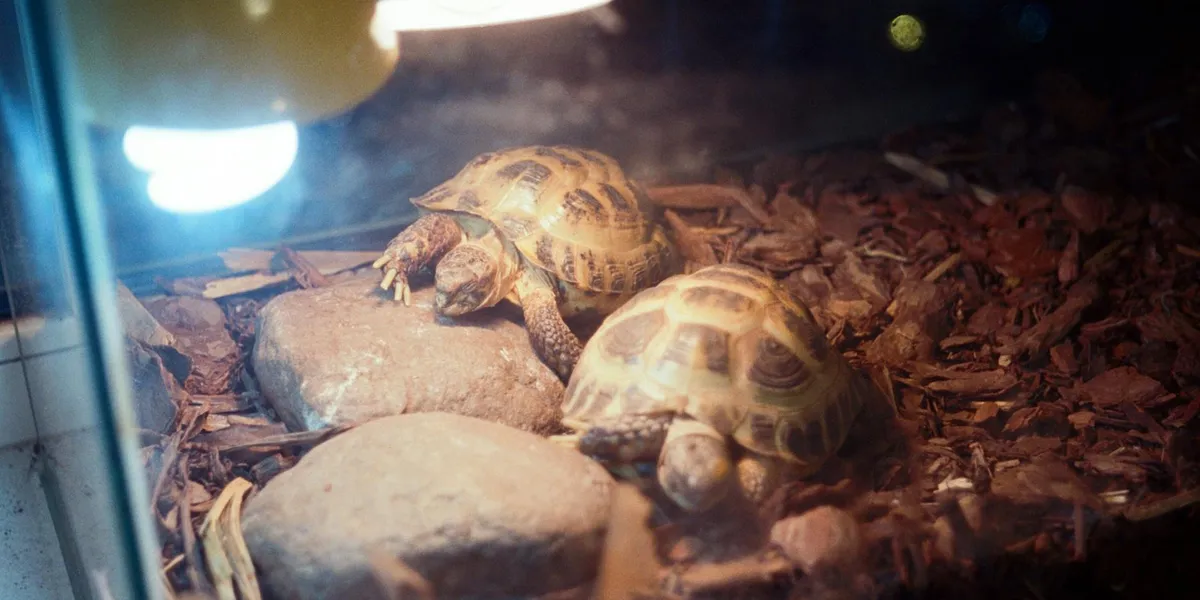
Your lighting system isn’t a “set it and forget it” deal. A little routine care prevents big problems. I have a reminder in my phone for bulb changes because it’s so easy to forget.
UVB bulbs lose their potency long before they burn out, so replace them every 6-12 months as the manufacturer recommends. Mark the purchase date right on the bulb’s base with a permanent marker.
- Wipe down light fixtures and the enclosure’s mesh screen monthly to remove dust that blocks precious UV and light.
- Check all cords and plugs regularly for any signs of fraying or heat damage.
- Use a timer! A consistent photoperiod of 12 hours on and 12 hours off is vital for your gecko’s circadian rhythm and plant health.
When things go wrong, your plants and gecko will tell you. If your pothos starts getting leggy or your ferns are browning, the light is likely too weak or too far away.
If your gecko, like my Jeter, is constantly hiding and never uses the basking spot, the temperature might be wrong or the light could be too harsh. These are common gecko heating mistakes to avoid. By fixing the setup—temps, basking spot distance, and lighting—you can keep your gecko comfortable.
- Move the lamp a few inches further away and re-check temperatures with a digital thermometer.
- Add more clutter, like trailing vines, to create dappled light and more shaded pathways.
- Ensure you have a proper, gentle heat gradient so your gecko can thermoregulate comfortably.
One of the most common mistakes I see is the misuse of red or blue “night” bulbs. Geckos can see this light, and it disrupts their sleep cycle and stresses them out.
For nighttime heat, ditch the colored bulbs entirely and use a Ceramic Heat Emitter (CHE) or a Deep Heat Projector (DHP), which produce no light. If your timer is set wrong and the lights are on at night, simply reset it. Your gecko needs a distinct and reliable day/night cycle to feel secure and stay healthy (mimicking natural day/night cycles for optimal health).
Enhancing Plant Growth with Grow Lights
You want a lush, vibrant jungle for your gecko, not a sad, wilting terrarium. The secret to thriving plants in a bioactive enclosure is a proper grow light, and modern LEDs are the perfect tool for the job. They produce the intense light plants crave without the excessive heat that could harm your gecko. When you build a bioactive gecko terrarium, a smart lighting plan ties everything together. It keeps plants thriving while keeping your gecko safe.
I used to struggle with my pothos and bromeliads until I switched to a dedicated LED grow light. The difference was night and day. My plants exploded with new growth, creating the dense cover my geckos need to feel secure. The light provides energy for photosynthesis without turning the enclosure into a sauna.
Understanding CRI and PAR: It’s Not Just About Brightness
When shopping for lights, you’ll see CRI and PAR values. Don’t let the jargon scare you.
- PAR (Photosynthetically Active Radiation) measures the light spectrum plants actually use to grow. Think of it as a specialized plant food made of light. You want a light with a high PAR output.
- CRI (Color Rendering Index) measures how naturally a light shows off colors. A high CRI (90+) makes your gecko’s colors pop and your plants look brilliantly green to your eyes.
A light with high PAR and high CRI is the gold standard. It’s the difference between a lamp that simply keeps plants alive and one that makes your entire bioactive world look stunningly real.
Creating an Engaging Environment
The benefits go beyond plant health. A well-placed grow light encourages natural behaviors. My Gargoyle Gecko, Mookie, is a perfect example.
Before the grow light, his favorite climbing branches were just structures. Now, they are sun-drenched highways that he patrols with playful enthusiasm. He’ll perch directly under the light, soaking in the warmth, before making a spectacular leap to a nearby fern. It’s like he’s diving for a catch in the outfield.
This setup mimics the dappled sunlight of a forest canopy. By lighting the upper areas, you give your arboreal geckos a dynamic space to explore, bask, and display their natural agility. It turns their home from a cage into a habitat.
FAQs
What is the most cost-effective lighting setup for a bioactive gecko enclosure?
Using energy-efficient LED lights for plant growth paired with a durable T5 HO UVB bulb can offer long-term savings while meeting both gecko and plant needs.
How can I ensure my gecko’s lighting is safe during a power outage?
Consider a battery-operated backup power source to maintain essential heat and light cycles without causing stress from sudden environmental changes.
Is it beneficial to combine different types of lights in one enclosure?
Integrating LED grow lights with specialized UVB and heat lamps can enhance plant vitality and support your gecko’s natural behaviors in a balanced habitat. When designing gecko enclosures, consider the best UVB bulbs and fixtures to ensure proper exposure and safe basking. A well-chosen UVB setup also helps maintain overall enclosure health for both plants and reptiles.
Final Thoughts
Lighting your bioactive enclosure correctly is about more than just brightness-it’s about creating a tiny, thriving ecosystem. Focus on providing a proper day/night cycle, a gentle UVB gradient for health, and a dedicated heat source for digestion. Pair this with robust, light-loving plants, and your vivarium will become a self-sustaining slice of nature.
Your gecko relies entirely on you to replicate the sun’s life-giving power. Observing how your pet uses the light and heat you provide is the best feedback for perfecting their home. Do geckos need heat at night? Many geckos still benefit from a gentle night-time warmth to support their metabolism. Stay curious, keep learning, and always prioritize the well-being of your scaled companion.
Further Reading & Sources
- r/bioactive on Reddit: Lighting for Bioactive Crested Gecko Enclosure
- Crested Gecko Complete Lighting and Heating Guide – Zen Habitats
- How To Build A Bioactive Enclosure For Your Crested Gecko – Reptiles Magazine
The Gecko Guide is your ultimate resource for gecko enthusiasts, providing expert advice and practical tips to ensure the health and happiness of your scaly companions. Alexander is a passionate gecko owner with over a decade of experience in reptile care. We are dedicated to offering accurate, up-to-date information to support your gecko journey.Our mission is to foster a community of responsible gecko owners who are passionate about the well-being of these fascinating creatures.
Lighting & UVB Requirements