
Gecko Habitat Setup: Your Simple Guide to a Happy Pet
Published on: December 21, 2025 | Last Updated: December 21, 2025
Written By: Alexander 'Gecko Geek' Johnson
Does the thought of setting up your gecko’s home make you nervous about getting it wrong? I’ve been there with my first leopard gecko, Griffey, and I know how stressful it can feel.
Based on my hands-on experience caring for five different gecko species, I will help you avoid common pitfalls. You will learn three key takeaways:
- How to select the ideal enclosure for your specific gecko’s needs.
- The right way to manage heat and humidity for a healthy environment.
- Which substrates and decorations are safe and which are dangerous.
You will get clear, step-by-step advice that takes the guesswork out of gecko care. We will cover: enclosure selection, heating and lighting, substrate safety, humidity control, feeding stations, and handling techniques.
Can Geckos Thrive in Your Home?
Indoor Survival Essentials
Your home isn’t a tropical rainforest or a rocky desert outcrop, so you must build a world for your gecko that mimics their natural home. Getting the environment right is the single most important factor for a healthy, thriving gecko. I learned this the hard way when my crested gecko, Jeter, became lethargic; I hadn’t realized his humidity was consistently too low. You need to master three key elements: temperature, humidity, and lighting.
- Temperature Gradients: Geckos are not like us; they can’t regulate their own body temperature. You must provide a warm side for basking and digestion and a cool side for resting. My leopard gecko, Griffey, spends his mornings on the warm side and afternoons chilling in his cool hide.
- Humidity Control: This is species-specific. My Giant Day Gecko, Babe, needs high humidity, while my African Fat-Tailed, A-Rod, needs moderate levels. A simple spray bottle and a digital hygrometer are your best friends here.
- Proper Lighting: Many geckos do not need special UVB lighting, but all need a consistent day/night cycle. For diurnal species like Babe, UVB is non-negotiable for their long-term health.
Preventing Escapes
Geckos are surprisingly strong and clever escape artists. My playful Gargoyle Gecko, Mookie, once nudged a poorly-fitted screen lid open and went on a brief, heart-stopping adventure. A secure enclosure is a non-negotiable aspect of responsible gecko ownership. Their safety depends entirely on the fortress you build.
- Invest in a High-Quality Lid: Screen lids must clip or lock down securely. Glass terrariums should have front-opening doors that latch firmly.
- Check for Gaps Weekly: Run your finger around the edges of the enclosure. If you feel a draft or see a gap wider than your gecko’s head, it’s an escape route waiting to happen.
- No Heavy Lifting: Never trust decorative items to hold a lid down. A determined gecko can easily push them aside. My territorial A-Rod has rearranged surprisingly heavy rocks to get a better vantage point.
Choosing the Right Gecko Enclosure
Enclosure Size by Species
Bigger is almost always better, but you also need to provide the right footprint and height for your gecko’s lifestyle. Choosing the correct enclosure size is the foundation for all other aspects of habitat design. Cramping a gecko leads to stress, which can cause illness and a poor quality of life.
| Species | Minimum Adult Size | Preferred Shape |
|---|---|---|
| Leopard Gecko / African Fat-Tailed | 20-Gallon Long (30″ x 12″ x 12″) | More floor space is critical. |
| Crested Gecko / Gargoyle Gecko | 18″ x 18″ x 24″ Tall | Height is essential for climbing. |
| Giant Day Gecko | 18″ x 18″ x 24″ Tall (Larger is better) | Very active; need both height and length. |
Ventilation and Airflow
Stagnant, stale air is a recipe for respiratory infections and mold growth. Proper ventilation is the invisible, yet vital, component that keeps your gecko’s environment healthy. I learned this lesson after a bout of mold appeared in one of my first, poorly-ventilated setups.
- Screen Tops: Excellent for most species, they allow heat and humidity to escape. This is perfect for arid species like leopard geckos.
- Front Ventilation Panels: Many modern glass terrariums have lower front vents and upper screen lids. This creates a perfect cross-flow of air, pulling fresh air in and pushing stale air out.
- Avoid Solid Tops for Humid Species: For geckos like Cresties that need high humidity, a solid top can cause air to become stagnant. A partially screened top is the best compromise to maintain humidity while allowing for airflow.
Mastering Temperature and Heating

Getting the temperature right in your gecko’s home is one of the most critical skills you’ll learn. Proper heating isn’t just about comfort; it’s the engine that drives their digestion, immune system, and overall activity. I learned this the hard way when my first gecko, Griffey, went off his food for a week—turns out his heating pad was on the fritz. That experience shows why it’s worth knowing common gecko heating mistakes to avoid them. Stay mindful of heat sources, gradients, and thermostats to prevent these issues.
Heat Lamps vs. Heating Pads
This is the great debate, and the right choice often depends on your gecko’s species and natural behavior.
- Heat Lamps (Overhead Heating): These mimic the sun. I use them for my Giant Day Gecko, Babe, who loves to bask openly. They provide Infrared A & B, which penetrates tissue more effectively for deeper warmth. They are excellent for creating a true basking area but can lower humidity.
- Heating Pads (Under-Tank Heaters): These provide belly heat, which is fantastic for aiding digestion. My Leopard Gecko, Griffey, and my Fat-Tail, A-Rod, spend hours lounging on the warm spot created by their pads. They don’t dry out the air, but they only heat the surface they’re attached to.
My general rule is that arboreal geckos (like Cresteds and Day Geckos) often do better with overhead heat, while terrestrial geckos (like Leopards and Fat-Tails) thrive with under-tank heat. Some owners, including myself, use a combination for a more complex thermal landscape.
Setting Up a Basking Spot
You’re not just heating the tank; you’re creating a temperature gradient. Your gecko needs a warm side and a cool side to self-regulate.
- Place your heat source (lamp or pad) on one end of the enclosure.
- Use a digital thermometer to measure the temperature directly on the surface of the basking spot. For most common pet geckos, this should be between 88-92°F.
- The cool side of the tank should be a comfortable 70-75°F.
- Provide a hide or a flat basking stone directly on the warm spot. My gecko Jeter has a cork round under his lamp that he treats like his personal throne.
Always connect your heat source to a thermostat-this non-negotiable device prevents dangerous temperature spikes and potential burns. It’s the single best investment I’ve made for my pets’ safety.
Avoiding Overheating Risks
Geckos are surprisingly vulnerable to heat stress. They can’t sweat or pant to cool down effectively.
- No Hot Rocks: Avoid those pet store “hot rocks” at all costs. They have a terrible history of malfunctioning and causing severe thermal burns on a gecko’s belly.
- Thermostat is a Must: I’ll say it again because it’s that important. An unregulated heat mat can reach over 120°F, which is dangerously hot.
- Check Ambient Temperatures: On very hot days, the ambient room temperature can cause your entire tank to overheat. Monitor the cool side closely and be prepared to turn off heating elements if needed.
- Watch for Signs of Stress: If your gecko is constantly gaping (holding its mouth open), staying pressed against the cool glass, or is unusually lethargic, check your temperatures immediately.
A simple infrared temperature gun, which I use daily, lets you instantly check surface temperatures anywhere in the habitat, giving you total peace of mind.
Lighting for Gecko Health and Behavior
Getting the lighting right in your gecko’s home does more than just let you see them. It directly influences their daily rhythms, feeding behavior, and long-term wellness. I learned this the hard way when my crested gecko, Jeter, became sluggish after I used a light that was far too intense for his comfort. In fact, lighting temperature—not just brightness—can shift gecko activity, feeding cues, and rest. Understanding how lighting temperature affects gecko behavior is essential for a healthy terrarium.
UVB and Vitamin D3 Needs
This is one of the most debated topics in gecko care. Do they need UVB? The simple answer is that while not all species require it, providing low-level UVB can be a fantastic welfare boost. UVB lighting helps a gecko produce its own Vitamin D3, which is critical for proper calcium absorption. Without enough D3, calcium from their diet goes to waste, leading to Metabolic Bone Disease (MBD), a painful and crippling condition. So what’s the connection between UVB and MBD in geckos? UVB enables Vitamin D3 production, which allows calcium to be absorbed properly and supports healthy bones.
Here is a quick guide based on species and their typical needs:
| Gecko Species | UVB Recommendation | Why It Matters |
|---|---|---|
| Leopard & Fat-Tailed Geckos | Optional, but beneficial. Use a low-output, shadedweller-style bulb (2%-4% UVB). | They are crepuscular (active at dawn/dusk). Low-level UVB mimics this natural light exposure and supports bone health. |
| Crested & Gargoyle Geckos | Optional, but beneficial. A very low-level UVB bulb is sufficient. | As arboreal (tree-dwelling) nocturnal species, they naturally get filtered sun. Providing it can improve activity and coloration. |
| Giant Day Geckos | Essential. Require a medium-strength UVB bulb (5%-6%). | They are diurnal (active during the day) and bask directly under the sun in the wild. UVB is non-negotiable for their health. |
If you choose not to use UVB lighting, you must provide Vitamin D3 through a high-quality reptile supplement powder. You are essentially replacing what they would make themselves, so consistency with dusting their food is absolutely vital. My leopard gecko, Griffey, has thrived for years with this careful supplementation method.
Positioning and Timing Lights
Where and when your lights are on is just as important as what type you use. Incorrect placement can cause thermal burns or stress your pet.
Follow these steps for safe setup:
- Create a Gradient: Never place the light in the dead center of the enclosure. Position it at one end to create a bright, warm basking zone and a shadier, cooler zone. This lets your gecko choose its comfort level.
- Mind the Distance: Follow the manufacturer’s instructions for the minimum safe distance between the bulb and your gecko’s highest climbing point. For my day gecko Babe, I ensure his highest branch is a good 10-12 inches from his UVB light to prevent overexposure.
- Use a Timer: This is the single best purchase you can make for your gecko’s mental health. A timer automates a consistent day/night cycle, typically 12 hours on and 12 hours off, which reduces stress immensely. Geckos can’t see red light, so total darkness at night is best.
- Provide Ample Hides: Make sure there are plenty of shaded hides and foliage on both the warm and cool sides of the tank. Your gecko needs to be able to get completely away from the light whenever it wants.
Lighting is not just about vision; it’s about creating a stable, predictable environment. A well-lit habitat that respects their natural instincts is a cornerstone of proactive, compassionate gecko care.
Managing Humidity and Ventilation
Getting humidity and airflow right feels like walking a tightrope-too much moisture and your gecko risks skin infections, too little and they struggle to shed properly. I learned this the hard way when my crested gecko Jeter had a bad shed; now I monitor levels daily with a digital hygrometer. Different species need different setups, so tailor your approach to your pet’s natural habitat.
Creating Humidity Gradients
A humidity gradient lets your gecko choose its comfort zone, much like how they seek warm or cool spots. In my tanks, I mimic this by misting one side heavily while keeping the other drier, so geckos like Jeter can hydrate or dry off as needed. This method essentially helps control humidity in a leopard gecko tank.
- Start by placing a shallow water dish on the warm end-evaporation boosts humidity there naturally.
- Add a humid hide stuffed with damp sphagnum moss; my leopard gecko Griffey loves his for post-meal relaxation.
- Use a fine mist sprayer to lightly dampen decor and foliage, focusing on areas away from ventilation sources.
- Check levels morning and night; aim for 50-70% on the humid side and 30-50% on the dry side for most species.
I adjust based on behavior-if Babe, my day gecko, avoids the moist area, I reduce misting. Observing your gecko’s habits is the best guide to fine-tuning their environment.
Preventing Mold and Stagnation
Stale air and mold are silent threats that can harm your gecko’s respiratory health. After spotting fuzzy growth in A-Rod’s enclosure, I revamped my ventilation strategy to keep air fresh and surfaces dry. Follow these steps to avoid common pitfalls:
- Install a screen top or small fans to promote cross-ventilation; this cuts down on moisture buildup.
- Choose substrates like coconut fiber or paper towel-they resist mold better than organic soils in my experience.
- Spot-clean daily and do a full substrate change monthly to remove waste and uneaten food.
- Position water dishes away from heat sources to slow evaporation and reduce condensation on walls.
Mookie’s tank stays mold-free since I added extra vents near the top. Regular maintenance isn’t just cleaning-it’s a commitment to your gecko’s long-term vitality.
Safe Substrate and Habitat Enrichment
Choosing the Best Substrate
Picking the floor for your gecko’s home is one of the most critical safety choices you’ll make. The wrong choice can lead to serious health issues. I learned this the hard way when my first leopard gecko, Griffey, ingested a small piece of loose substrate and had a scary vet visit. Since then, I’ve become a substrate purist.
Your best bet is often the simplest. Here are the safest options I use and trust:
- Paper Towel or Slate Tile: This is my go-to for all new geckos and my leopard geckos, Griffey and A-Rod. It’s cheap, sterile, and impossible to ingest. You see every poop, which makes spot-cleaning a breeze.
- Bioactive Setup: For my crested gecko, Jeter, and my gargoyle gecko, Mookie, I use a bioactive substrate. This is a special mix that hosts beneficial insects (clean-up crew) that break down waste. It’s advanced but mimics their natural environment beautifully.
- Reputable Soil/Sand Mixes: For species like my African fat-tailed gecko, A-Rod, a *packed down* mix of topsoil and play sand can work. The key is that it’s firm, so they aren’t walking on loose sand that can be eaten.
Avoid calcium sand and pure, loose substrates like the plague-they are an impaction risk waiting to happen. Your gecko’s life is worth more than a “pretty” but dangerous floor.
Adding Hides and Climbing Structures
Geckos are not decor; they are living creatures with instincts for security and exploration. A bare tank is a stressed gecko. My giant day gecko, Babe, went from hiding all the time to confidently basking in the open once I gave her enough cover to feel safe.
You need at least three types of hides:
- A Warm Hide: Place this on the heated end of the tank. My geckos love reptile caves or even simple plastic containers with an entrance hole.
- A Cool/Moist Hide: This is non-negotiable for shedding. I use a hide filled with damp sphagnum moss. It’s a personal sauna that helps them slip out of their old skin easily.
- A Cool, Dry Hide: Place this on the unheated side. It gives them a safe place to cool down and just chill out away from the heat.
Beyond hides, think vertical! Arboreal species like Jeter and Mookie need a jungle gym.
- Cork Rounds & Flats: These are fantastic. They provide climbing surfaces, hiding spots, and look natural.
- Magnetic Ledges: A game-changer for glass tanks. My crested geckos spend hours perched on these high-up shelves.
- Sturdy Branches & Vines: Create pathways for them to explore. Watching Mookie leap between branches is like watching a tiny, scaled acrobat.
Clutter is your friend. A busy tank is a happy, active, and secure tank.
Feeding and Hydration in the Habitat
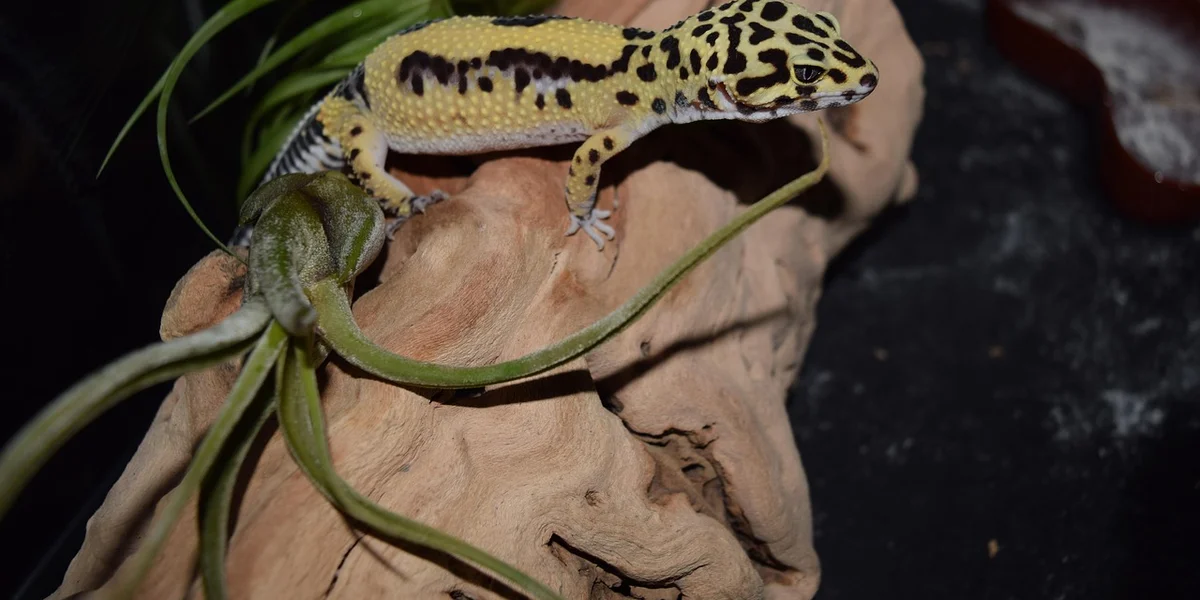
Water Bowls and Hydration
Your gecko needs constant access to clean water to stay healthy and hydrated. I learned this early on with my leopard gecko, Griffey, who would eagerly lap water after his active explorations. Always use a shallow, heavy-bottomed water dish that your gecko cannot easily tip over. This prevents spills and keeps the habitat drier.
Place the water bowl on the cooler side of the enclosure, away from heat lamps. I made the mistake of putting it under a basking light once, and the water evaporated way too fast for my gecko Babe. Check and refill the bowl with fresh, dechlorinated water every single day without fail. Stagnant water can grow harmful bacteria.
Some geckos, like crested or gargoyle geckos, may also drink water droplets from misted leaves. My crested gecko Jeter seems to prefer this method. Observe your pet’s drinking habits closely to ensure they are getting enough fluids. A dehydrated gecko can become lethargic and lose skin elasticity.
- Choose a ceramic or glass dish for stability and easy cleaning.
- Wash the bowl with hot water and a reptile-safe disinfectant weekly.
- If you notice your gecko soaking in the water, it might indicate low humidity or mites-investigate promptly.
Feeding Prey and Supplements
Feeding your gecko isn’t just about tossing in insects; it’s about providing balanced nutrition. I feed my crew a variety of gut-loaded prey like crickets, dubia roaches, and mealworms. Gut-load your feeder insects with nutritious vegetables 24 hours before offering them to your gecko. This passes essential vitamins to your pet and ensures you’re offering the right kind of live insects for your gecko.
Supplements are non-negotiable for preventing metabolic bone disease and other deficiencies. I dust prey with calcium powder for every feeding and a multivitamin once or twice a week. Young, growing geckos and breeding females need more frequent calcium and vitamin dusting than adults. My gecko A-Rod gets a little extra because he’s a picky eater.
Adjust feeding frequency based on species and age. My juvenile gargoyle gecko Mookie eats every day, while my adult leopard gecko Griffey eats every other day. Overfeeding can lead to obesity, especially in less active species like African fat-tailed geckos. I keep an eye on Babe’s tail size to make sure it stays plump but not overly fat.
- Select prey that is no wider than the space between your gecko’s eyes.
- Use a shallow feeding dish to prevent insects from hiding in substrate.
- Remove uneaten live prey after 15 minutes to avoid stress or bites to your gecko.
Watch how your gecko hunts—it’s a great indicator of their health. My gecko Jeter calmly stalks his food, while Mookie makes playful leaps. If your gecko isn’t eating, you may wonder what to do. Start by reviewing their habitat and routine, and watch for other signs of stress. If your gecko refuses food for more than a few days, check your habitat temperatures and consult a vet. For more information, visit this helpful guide. Proper feeding supports a long, vibrant life for your scaly friend.
Daily and Weekly Habitat Maintenance
Caring for your gecko’s home isn’t just about aesthetics; it’s the foundation of their health. A clean habitat prevents the growth of harmful bacteria and parasites that can make your scaly friend seriously ill. I’ve learned through years with my crew that a simple, consistent routine is far easier than dealing with a sick gecko.
Sanitation and Spot Cleaning
Think of this like tidying your kitchen after a meal. You don’t deep clean every day, but you handle the messes. Daily spot cleaning is your single most effective tool for maintaining a healthy environment.
Here is your simple daily routine:
- Remove uneaten live insects within a few hours.
- Check for and remove any shed skin.
- Use a paper towel or a dedicated scoop to clean up feces and urates. My gecko, A-Rod, always uses the same corner, which makes my job easy!
- Wipe down any visibly soiled surfaces or décor with a reptile-safe disinfectant.
Once a week, you need to do a more thorough cleaning.
- Move your gecko to a secure, temporary holding bin.
- Remove all décor, bowls, and hides.
- Dispose of all substrate if you are using a loose, replaceable type like paper towel.
- Scrub the entire empty enclosure with a reptile-safe disinfectant. I use a diluted chlorhexidine solution.
- Rinse everything thoroughly with clean water and let it dry completely.
- Add fresh substrate and put all clean, dry décor back in.
Monitoring Gecko Health
Your daily cleaning routine is the perfect time for a quick health check. You are your gecko’s first line of defense, and catching a problem early can be life-saving. I always do a visual check on each of my geckos when I spot clean.
Look for these positive signs of a healthy gecko:
- Clear, bright eyes (for species with eyelids, they should not be sunken).
- A plump, fleshy tail that acts as a fat store.
- Alert and curious behavior when you approach.
- Consistent appetite and regular, well-formed droppings.
Be on high alert for these potential red flags:
- Weight loss, especially a thin tail or visible hip bones.
- Stuck shed, particularly on toes and the tip of the tail.
- Lethargy or lack of interest in food.
- Difficulty moving, limping, or dragging limbs.
- Visible wounds or patches of discolored skin.
I keep a simple notebook to track weights and notable behaviors. Noticing that my crested gecko Jeter had lost a few grams tipped me off to a minor issue we could fix with diet tweaks before it became serious. This simple habit gives you powerful data.
FAQs
How often should I handle my gecko?
Handling frequency should be limited to a few times per week to minimize stress, as overhandling can cause anxiety and health issues in most gecko species.
Can different gecko species be housed together?
No, housing different gecko species together is unsafe due to risks of aggression, stress, and incompatible environmental needs, which can lead to injury or illness. When different gecko species live together, the chances of interspecific aggression and mismatched care requirements increase. Therefore, it’s generally best to house each species in its own enclosure to ensure their safety and well-being.
What is the average lifespan of a pet gecko?
With proper care, common pet geckos like leopard geckos typically live 10-20 years, though lifespan varies by species and husbandry quality. A quick gecko lifespan comparison shows that different species can differ by several years, so longevity is an important factor when selecting a pet gecko.
Final Words
Creating a proper home for your gecko boils down to a few key elements: a secure tank with the right heating gradient, specific humidity levels, and plenty of clutter and hides to make them feel safe. Proper habitat setup helps prevent common gecko illnesses by reducing stress and keeping temperatures and humidity stable. A well-maintained enclosure supports their immune system and overall health. Matching your habitat setup to your gecko’s natural instincts is the single most important thing you can do for their long-term health.
Owning a gecko is a long-term commitment to a living creature that depends entirely on you for its wellbeing. I encourage you to always stay curious, ask questions, and keep learning, because the best gecko caretakers are the ones who never stop trying to do better. As you observe your gecko, you’ll notice lifecycle milestones—from hatchling to juvenile to adult—each bringing new care needs. Tracking these milestones helps you provide developmentally appropriate care at every stage.
Further Reading & Sources
- Leopard Gecko Enclosure: How to Set Up The Ideal Tank?
- A beginner’s guide to leopard gecko housing and setup – Leopard Gecko Care
- How to Build a Favorable Habitat For Your Leopard Gecko
The Gecko Guide is your ultimate resource for gecko enthusiasts, providing expert advice and practical tips to ensure the health and happiness of your scaly companions. Alexander is a passionate gecko owner with over a decade of experience in reptile care. We are dedicated to offering accurate, up-to-date information to support your gecko journey.Our mission is to foster a community of responsible gecko owners who are passionate about the well-being of these fascinating creatures.
Gecko Housing & Habitat