
How Geckos Hear: Unlocking the Secrets of Their World
Published on: May 11, 2026 | Last Updated: May 11, 2026
Written By: Alexander 'Gecko Geek' Johnson
Have you ever called your gecko’s name, only to be met with a blank, unblinking stare, making you wonder if they can even hear you at all? I’ve been there with my own crew, from Griffey the Leopard Gecko to Jeter the Crested, and the answer is far more fascinating than a simple yes or no.
I’m going to help you understand exactly how your gecko’s hearing works. We will cover the unique anatomy of their ears, what their world actually sounds like, and how this knowledge makes you a better, more empathetic pet owner.
- The simple external structure that acts as their ear.
- The incredible range of sounds they can actually detect.
- How their hearing influences their behavior in your terrarium.
You will get clear, straightforward advice based on my years of living with these incredible reptiles. The article covers: gecko ear anatomy, hearing range and capability, differences between species, behavioral signs of hearing, and practical care tips for their well-being.
Gecko Ear Anatomy: How Their Ears Are Built
If you look just behind your gecko’s eye, you’ll see a little hole. That’s their ear opening. This is the gateway to their entire hearing system, covered by a thin, sensitive disc called the tympanic membrane, or eardrum. I’ve watched my gecko, Griffey, turn his head when I crinkle a worm bag, and you can sometimes see that membrane subtly vibrate. Geckos also rely on smell through the vomeronasal organ in the roof of their mouth, which they sample with their tongue to detect scents and pheromones.
The Outer and Middle Ear
- External Ear Opening: A simple hole on the side of the head. No fancy earflaps here.
- Tympanic Membrane: This is the eardrum. It’s the part you can see, and it catches sound waves from the air.
- Middle Ear Bones (Columella/Stapes): Behind the eardrum sits a tiny, crucial bone. In geckos, this is often called the columella. Think of this bone as a tiny listening stick that physically taps on the inner ear to pass the sound message along.
The Inner Ear: The Sound Control Center
- Cochlea: This is a fluid-filled, snail-shell-shaped tube. Sound vibrations from the middle ear bone create waves in this fluid.
- Basilar Papilla: Inside the cochlea, this is the gecko’s true hearing organ. It’s lined with microscopic hair cells that sway with the fluid waves.
- Semicircular Canals: These looped tubes are next to the cochlea. They are your gecko’s gyroscope, responsible for balance and coordination during their acrobatic climbs.
I like to imagine the whole system as a sophisticated doorbell. The ear hole is the button you push (sound enters), the eardrum is the button surface (it vibrates), the middle ear bone is the wiring (it carries the signal), and the inner ear is the chime unit inside the house (it rings and tells the brain someone’s there).
How Geckos Detect and Process Sound
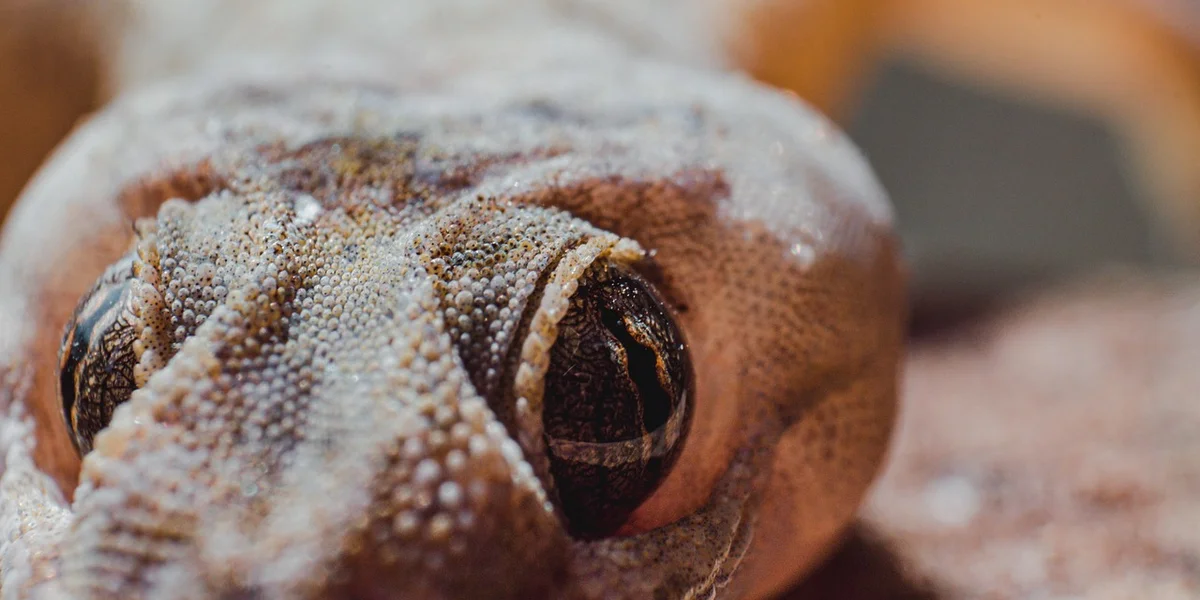
Hearing isn’t just about having ears; it’s about the incredible journey a sound takes. The entire process, from a distant noise to a recognized sound, happens in a breathtakingly fast chain reaction.
The Sound Transmission Path
- Capture: Sound waves travel through the air and enter the external ear opening.
- Vibration: These waves hit the tympanic membrane, making it vibrate like a tiny drum.
- Transfer: The vibrating eardrum shakes the columella bone in the middle ear.
- Amplification: This bone acts like a lever, amplifying the vibrations as it passes them into the fluid of the inner ear.
The Quadrate-Stapes Complex: A Gecko’s Secret Weapon
Geckos have a special adaptation. Their jawbone (the quadrate) is connected to their hearing bone (the stapes/columella). This “quadrate-stapes complex” means vibrations from the ground, transmitted through their jaw, can also be picked up as sound. So when my gecko, A-Rod, rests his chin on a branch, he’s not just lounging; he’s listening to the vibrations of his entire world.
Translating Vibrations into Information
- Fluid Waves: Inside the cochlea, the vibrations create ripples in the fluid.
- Hair Cell Activation: These fluid waves bend the microscopic hair cells on the basilar papilla.
- Electrical Signal: When a hair cell bends, it fires an electrical signal. Different pitches of sound bend different hair cells. It’s like running a finger across a piano keyboard-each key produces a unique note for the brain to hear.
From Detection to Brain Interpretation
- Detection: Hair cells in the basilar papilla are stimulated.
- Transmission: The auditory nerve carries the electrical signals from the ear.
- Interpretation: The brain receives these signals, decodes their pattern and intensity, and identifies the sound. It decides: “Is this the rustle of a predator? Or the delightful sound of my human with food?”
Watching my crested gecko, Jeter, react to my voice showed me this process in action. He hears the vibration, his brain processes it as “not a threat,” and he goes back to sleep. This complex biology is why a quiet, low-stress environment is so vital for their well-being. Signs of stress in geckos are closely tied to their surroundings—noise, temperature, and humidity can all influence their reactions. Their ears are always on, processing the world in a way we can only try to imagine.
What Sounds Can Geckos Actually Hear?
My gecko Griffey will often turn his head when I tap on the glass, but completely ignores my singing. This had me wondering for years about what he can actually perceive. Geckos hear best in a range of about 100 to 5,000 Hertz (Hz), with peak sensitivity often between 500 and 1,500 Hz. This is a much narrower band than human hearing.
This range is perfectly tuned for their survival. It lets them hear the low-frequency rustles of insect prey and the deep, rumbling footfalls of a potential predator. A chirping cricket falls right in their sweet spot. A high-pitched dog whistle does not.
Hearing Differences Across Species
Not all geckos listen to the world the same way. Their environment and lifestyle shape their hearing.
- Leopard Geckos (like Griffey): As terrestrial geckos, they are highly attuned to ground-borne vibrations and low-frequency sounds. They are exceptionally good at pinpointing the scuttle of a mealworm.
- Crested Geckos (like Jeter): Being arboreal, their world is filled with different sounds. They are likely more sensitive to the sounds of wind, rustling leaves, and other geckos moving in the canopy.
- Tokay Geckos: Known for their loud vocalizations, these geckos have highly developed hearing to communicate with their loud “To-kay!” calls.
Answering Your Top Gecko Hearing Questions
Let’s tackle the questions I get asked most often by fellow owners.
Can your gecko hear you? Absolutely. Your voice, which typically sits between 85-255 Hz for men and 165-255 Hz for women, falls within their hearing range. They perceive your voice as a low-frequency vibration and sound, not as distinct words.
Do they recognize your voice? This is a fascinating one. From my experience, they may not recognize the specific timber of *your* voice, but they absolutely learn to associate the sound of you with positive outcomes—like feeding time. My geckos become visibly more active when they hear me open the cricket tub, a sound they’ve learned means dinner is served. That question sits at the heart of reptile-recognition science: do geckos recognize individual humans or just cues like voice and routine? In practice, they tend to respond to familiar signals and patterns rather than identifying you as a specific person.
Household Sounds and Your Gecko
Your home is full of noises. Here’s how some common ones might affect your pet.
- Television & Music: The constant, low rumble of a TV or stereo can be a source of background vibration. Keep the volume moderate, as sudden, loud explosions or music can be stressful.
- Vacuum Cleaners: These are loud, low-frequency monsters to a gecko. I always move my geckos to a quiet room when I need to vacuum nearby.
- Slamming Doors & Barking Dogs: These sharp, impulsive sounds can startle them. It’s a good reminder to always approach their enclosure calmly.
Gecko Hearing vs. Other Reptiles and Pets
It’s easy to assume all animals hear the way our dogs and cats do. Gecko hearing is a unique and specialized system that stands apart from both mammals and other reptiles. They don’t need to hear a mouse squeak from a mile away. Their needs are different.
How Geckos Stack Up
Let’s put their abilities into perspective.
- Vs. Dogs & Cats: Mammals are hearing champions. Dogs can hear up to 45,000 Hz and cats up to 64,000 Hz. They use these high frequencies for hunting. Geckos are low-frequency specialists by comparison.
- Vs. Snakes: Snakes lack external and middle ears entirely. They “hear” almost exclusively through ground vibrations sensed by their jawbones. Geckos have a much more traditional and sensitive auditory system.
- Vs. Bearded Dragons: Like geckos, bearded dragons have a simple ear opening. Their hearing range is somewhat similar, but geckos often have more specialized structures for sound localization.
Unique Gecko Adaptations
Geckos have a clever trick for figuring out where a sound is coming from. Their two eardrums are connected internally via a tiny channel, allowing sound to reach both the outer and inner surface of each eardrum. This complex interaction helps their brain calculate the direction of a sound with surprising accuracy, even without movable outer ears.
This is crucial for a small animal that is both predator and prey. Knowing whether a rustle is a tasty cricket to the left or a hungry bird to the right is a matter of life and death.
Communication Without a Voice
You’ll notice most geckos, like my leopard and fat-tailed geckos, are largely silent. Why evolve complex vocal cords when your world is built on vibration and sight? They communicate volumes through body language—a raised tail, a slow head bob, a quick tail shake. These visual and vibrational signals are often more effective and stealthy in their natural habitats than a noisy call would be. But are common gecko vocalizations themselves body language cues? In many species, vocalizations accompany visual signals and can reinforce the message rather than replace it.
| Animal | Approximate Hearing Range | Key Hearing Feature |
|---|---|---|
| Leopard Gecko | 100 – 5,000 Hz | Low-frequency specialist; excellent sound localization |
| Dog | 65 – 45,000 Hz | High-frequency expert for hunting |
| Cat | 45 – 64,000 Hz | Ultra-sensitive high-frequency hearing |
| Bearded Dragon | 100 – 4,000 Hz | Simple ear structure; sensitive to vibrations |
| Snake | N/A (primarily feels vibrations) | No external ears; uses jawbone to sense ground waves |
Signs of Ear Problems and Hearing Loss in Geckos

Your gecko can’t tell you their ear hurts, so you need to be a sharp observer. I learned this the hard way when my crested gecko, Jeter, started acting oddly. Catching these signs early is your best defense against a minor issue becoming a major health crisis.
Symptoms to Watch For
- Discharge or Crust: Any waxy buildup, pus, or dark debris around the ear opening (the tympanum) is a major red flag.
- Persistent Head Tilting: If your gecko consistently holds its head at a strange angle, it’s a classic sign of an inner ear infection or issue.
- Lack of Response to Noise: A healthy gecko will often flinch or look around if you clap loudly near its enclosure. A lack of reaction can indicate hearing loss.
- Scratching or rubbing at the head and ear area frequently.
- Loss of appetite or general lethargy, which often accompanies pain.
- Visible swelling or redness around the tympanic membrane.
How to Safely Examine Your Gecko’s Ears
During your weekly health check, a quick ear inspection is simple. Hold your gecko gently but securely in one hand. Look for the clear, circular eardrum on the side of the head, just behind the eye—it should look like a flat, translucent disc. It should not be sunken in, bulging out, or discolored. My leopard gecko, Griffey, is used to this quick check and stays perfectly still. This ear check is part of the ultimate gecko health troubleshooting checklist—step-by-step diagnostic guide. If you notice anything unusual, follow the next diagnostic steps in the guide.
Common Ear Diseases and When to Vet
- Ear Infections: Often bacterial, these can cause swelling and pus. They require prescription antibiotics from a vet.
- Mites: These tiny parasites can irritate the ear canal.
- Aural Abscesses: These are solid, cheesy-looking buildups of infection behind the eardrum. Any of these conditions demand an immediate visit to an exotic veterinarian-do not try to treat them yourself.
Quick At-Home Ear Inspection Steps
- Wash and dry your hands thoroughly.
- Hold your gecko calmly in good lighting.
- Gently observe both sides of the head.
- Compare both ears; they should look symmetrical and clean.
- If you see anything unusual, schedule a vet appointment.
Caring for Your Gecko’s Hearing: Noise and Habitat Tips
Geckos live in a world of vibrations and low-frequency sounds. Our modern homes are full of noises that are, to them, like living next to a construction site. Designing a low-stress audible environment with gentle sound vibrations can help soothe geckos. Small, quiet changes in household sound can make a calm, gecko-friendly habitat. Protecting their hearing is a core part of ethical pet ownership.
Reducing Noise Pollution
I made the mistake of placing my first terrarium right next to a large speaker. My geckos were visibly stressed. Keep enclosures away from constant, loud noise sources like televisions, stereos, and rumbling appliances like refrigerators or washing machines. Sudden, sharp noises are particularly jarring. This is part of making your gecko enclosure safe from common household hazards. Here are practical tips.
Ideal Terrarium Placement
Vibrations travel surprisingly well through floors and walls. Place the terrarium on a sturdy piece of furniture against an interior wall, away from heavy foot traffic areas. Avoid placing it on a wobbly stand or directly on a floor that gets stomped on often.
Monitoring Stress Signals
- Hiding Constantly: If your normally curious gecko is always buried in a hide, noise could be the culprit.
- Refusing Food: Stress from a loud environment is a common reason for a gecko to go off its food.
- Pacing or Glass Surfing: This can be a sign of trying to escape an unpleasant environment.
My fat-tailed gecko, A-Rod, would immediately retreat into his hide when the vacuum cleaner started. Watching your gecko’s behavior is the best way to gauge if their environment is too loud.
Checklist for a Hearing-Friendly Habitat
- [ ] Terrarium is in a quiet, low-traffic room.
- [ ] Enclosure is not on the same surface as speakers or subwoofers.
- [ ] Background music or TV is kept at a low volume.
- [ ] You observe your gecko for signs of noise-related stress.
- [ ] The stand or furniture is stable and does not transmit vibrations.
Common Questions
Can my gecko learn to recognize my specific voice?
While they may not recognize the unique timber of your voice, they can learn to associate the sound of you with positive events like feeding time.
Is certain types of music harmful or stressful to my gecko?
Loud, bass-heavy music can be stressful, but they generally tolerate quiet, ambient sounds well.
How often should I check my gecko’s ears for potential problems?
You should perform a quick visual inspection of your gecko’s ears during your regular weekly health checks.
Can a gecko be born deaf?
Yes, congenital deafness is possible in geckos, though it is more commonly a result of injury or infection later in life.
Do geckos rely more on their hearing or their vision?
Geckos are highly visual hunters, but their specialized hearing and vibration detection are crucial for detecting both prey and predators. In crested geckos, body language reveals mood and intent. This is covered in the crested gecko behavior body language ultimate guide.
Final Words
Ultimately, your gecko hears the world as a series of low-frequency vibrations, relying on its simple but effective ear structure to navigate and feel safe. This is a common question in gecko health and safety guides: are geckos safe to touch? Protect those delicate ears by keeping their habitat in a calm, quiet part of your home and always supporting their head and body during handling to prevent injury. With proper and gentle handling, geckos can be touched safely while minimizing stress and risk to both animal and handler.
Being a great gecko owner means committing to understanding their unique biology and behaviors, constantly learning how to provide a better life. I encourage you to keep asking questions and exploring trusted resources, like the care guides here on our blog, to ensure your scaly friend thrives for years to come.
Further Reading & Sources
- UMD Scientists Uncover Geckos’ Auditory ‘Sixth Sense’ | Maryland Today
- Geckos have a ‘sixth sense’ | Popular Science
- The Hearing of Geckos | SpringerLink
The Gecko Guide is your ultimate resource for gecko enthusiasts, providing expert advice and practical tips to ensure the health and happiness of your scaly companions. Alexander is a passionate gecko owner with over a decade of experience in reptile care. We are dedicated to offering accurate, up-to-date information to support your gecko journey.Our mission is to foster a community of responsible gecko owners who are passionate about the well-being of these fascinating creatures.
Gecko Health