
Do Leopard Geckos Need UVB? A Complete & Honest Guide
Published on: June 8, 2026 | Last Updated: June 8, 2026
Written By: Alexander 'Gecko Geek' Johnson
You’re staring at your happy, healthy-looking leopard gecko and wondering if you’re missing a crucial piece of their care by skipping that UVB bulb. It’s a hot topic in the gecko community, and the conflicting advice can leave any owner feeling confused and a little guilty.
I’ve been there myself with my own geckos. After years of keeping them both with and without UVB lighting, I’m here to cut through the noise. We’ll break down the science and my real-world experience into simple takeaways. You’ll learn:
- The proven health benefits of providing UVB.
- How to choose the perfect, safe UVB setup.
- The straightforward signs your gecko is thriving with its new light.
By the end of this guide, you’ll have the confidence to make the best choice for your scaly friend. We cover: Leopard gecko biology, the D3 debate, proper bulb strength, safe distances, photoperiods, and recognizing overexposure.
Do Leopard Geckos Really Need UVB Light?
Natural Habitat and UVB Exposure
Many owners picture leopard geckos as purely nocturnal creatures hiding in dark burrows all day. I thought the same for years. The truth is far more nuanced. In their native rocky grasslands of Afghanistan and Pakistan, leopard geckos are actually crepuscular.
This means they are most active during dawn and dusk. These twilight hours still provide measurable, though low-level, UVB exposure as the sun sits low on the horizon. They don’t bake under the midday sun like a bearded dragon, but they aren’t living in total darkness either.
My gecko, Griffey, will often emerge from his hide an hour or two before his lights go off. He’ll find a spot to lounge, not directly under his heat lamp, but still within the ambient light of his terrarium. This behavior mirrors what he’d do in the wild-catching those final, gentle rays of the day, especially for crepuscular species.
What the Experts and Breeders Say
The conversation around UVB for leopard geckos has evolved dramatically. For a long time, the standard advice from many breeders was “no UVB needed, just use calcium with D3.” This was the advice I followed with my first geckos years ago.
Modern reptile medicine and expert herpetologists now advocate a different approach. Leading veterinary organizations now recognize that providing low-level UVB is a best practice for simulating a more natural and biologically beneficial environment.
Many progressive breeders have made the switch and report positive outcomes. They note stronger bone structure, better overall vitality, and more natural behaviors in their breeding stock and offspring. It’s about giving our pets an opportunity to regulate their own health, just as they would in the wild. It’s a move from adequate care to exceptional care.
How UVB Lighting Affects Leopard Gecko Health
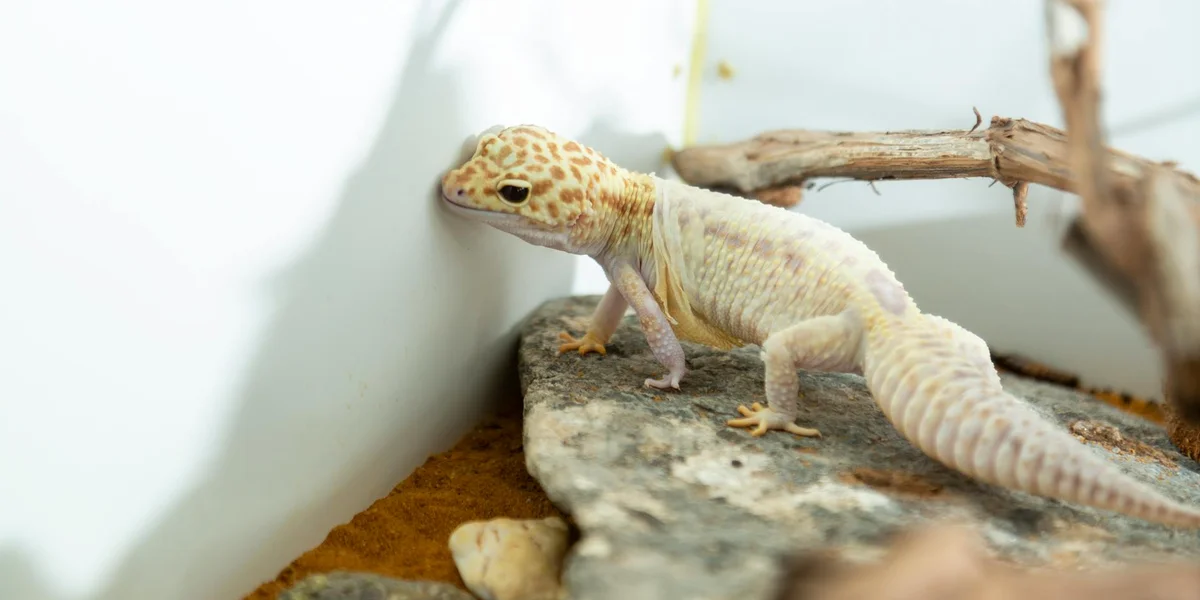
Vitamin D3 and Calcium Metabolism
This is the core of the entire UVB discussion. Think of it as a simple, three-part chain that keeps your gecko strong. Some readers encounter the claim that UVB is optional or dangerous. In the article UVB Optional Myth Explained, we separate myth from fact and explain what your gecko really needs.
- Step 1: UVB Exposure – When the gecko’s skin is exposed to UVB light, it synthesizes a pre-form of Vitamin D3.
- Step 2: Vitamin D3 Activation – This pre-vitamin is then processed by the liver and kidneys into the active form of Vitamin D3 that the body can use.
- Step 3: Calcium Absorption – The active Vitamin D3 acts as a key, unlocking the gecko’s ability to absorb calcium from its food in the intestines.
Without that UVB “key,” the calcium in their gut just passes through unused, no matter how much you dust their insects. This is why the combination of UVB and a balanced calcium supply is so powerful. It allows for a more natural and self-regulated internal process.
Recognizing UVB Deficiency Symptoms
Metabolic Bone Disease (MBD) is the tragic, end-stage result of a long-term UVB and calcium deficit. It’s entirely preventable. You need to catch the warning signs long before it gets to that point.
Watch for these subtle early signs in your leopard gecko:
- A slight tremble or shakiness in the legs when walking.
- Difficulty climbing or a lack of interest in exploring.
- The lower jaw feeling soft or rubbery when gently touched.
- A kink or bend in the tail or spine that wasn’t there before.
Any sign of limping, swelling in the jaws or limbs, or a general lethargy is a red flag that demands immediate veterinary attention. I once helped a friend identify early MBD in her gecko because its walk just looked “off.” Catching it early made all the difference in its recovery. Your vigilance is their first line of defense.
Choosing the Right UVB Setup for Your Leopard Gecko
Selecting a UVB Bulb: Strength and Type
Picking the right UVB bulb feels like choosing the perfect spotlight for a star performer-your gecko deserves nothing less. I’ve tested various bulbs with my leopard gecko, Griffey, and learned that not all UVB sources are created equal. Linear T5 or T8 fluorescent bulbs are your best bet because they spread UVB evenly across the habitat. Compact coils can create hot spots and uneven exposure, which might stress your pet.
- Strength: Aim for a bulb that emits 2-3% UVB (or a UV Index of 1-2). Brands like Arcadia ShadeDweller or Zoo Med Reptisun work wonders.
- Type: T5 bulbs are more efficient and last longer, while T8s are budget-friendly but need replacement every 6-12 months.
From my experience, Griffey’s golden spots seem to shimmer more under a T5 linear bulb-it’s like he knows he’s getting the VIP treatment!
Placement and Height for Optimal Exposure
Where you position the UVB bulb is just as crucial as the bulb itself. Imagine it as setting up a cozy sunbeam for your gecko to lounge in. Place the bulb 12-18 inches above the basking area to prevent overexposure or burns. Remember, this is all part of properly positioning UVB lights in a gecko habitat. Ensure the setup lets your gecko freely move between UV and shaded areas.
- Use a reflector to direct UVB downward, maximizing its reach.
- Ensure there are shaded areas so your gecko can retreat if needed-Griffey loves having options, just like his curious nature.
I mounted mine 15 inches high, and now Griffey basks proudly, as if he’s center stage under a warm, gentle glow.
Creating a Safe Lighting Schedule
Consistency is key to mimicking a natural day-night cycle and keeping your gecko stress-free. Run the UVB light for 10-12 hours daily, syncing it with daytime hours. I use a simple plug-in timer-it’s a game-changer that prevents forgetfulness and helps regulate their internal clock.
- Turn off UVB at night to allow for proper rest; leopard geckos are crepuscular, so they’re most active at dawn and dusk.
- Monitor your gecko’s behavior: if they’re hiding excessively, shorten the exposure time.
With this schedule, Griffey stays energetic without feeling overwhelmed-it’s like giving him a predictable routine that he can count on.
UVB Alternatives: Supplementation vs. Lighting
Oral D3 Supplements: How They Work
If UVB lighting isn’t feasible, oral D3 supplements step in as a reliable backup. Think of them as a shortcut to vitamin D3, which is essential for calcium absorption. These supplements provide pre-formed D3, so your gecko doesn’t need UVB to produce it naturally. I’ve used powdered versions like Repashy Calcium Plus, dusted lightly on crickets or mealworms.
- Dust feeder insects 2-3 times a week for adult geckos, and more frequently for juveniles.
- Always pair D3 supplements with a calcium source without D3 to avoid overdosing.
In my early days, I relied solely on supplements for a rescued gecko, and it helped him regain strength-but it’s not a perfect substitute for the real deal.
Weighing the Options: Which Is Better?
Choosing between UVB lighting and D3 supplements boils down to your gecko’s overall well-being and your lifestyle. UVB lighting encourages natural behaviors like basking and may improve immune function, while supplements offer convenience and control. Here’s a quick comparison based on my hands-on trials:
| Option | Pros | Cons |
|---|---|---|
| UVB Lighting | Promotes natural activity; may enhance coloration and appetite | Higher upfront cost; requires careful setup and maintenance |
| Oral D3 Supplements | Easy to use; budget-friendly; good for geckos in low-light setups | Misses behavioral benefits; risk of improper dosing |
I lean toward UVB for my geckos because it supports their instinctual needs-Griffey’s playful antics under the light are proof enough for me. But if you opt for supplements, always follow dosage guidelines to keep your pet safe and healthy.
Implementing UVB Lighting Safely and Effectively

Setting up UVB lighting isn’t just about screwing in a bulb. You need a strategy. Proper placement and fixture choice are the bedrock of safe, effective UVB provision for your leopard gecko. I learned this the hard way with Griffey, whose first setup was a bit of a guessing game. That mindset is part of a complete guide to lighting a bioactive gecko enclosure. In that guide, you’ll find practical tips on UVB, basking spots, photoperiods, and how lighting ties into a thriving bioactive setup.
Monitoring UVB Output and Bulb Lifespan
UVB bulbs are not like your standard light bulbs. Their invisible UVB output degrades long before the bulb visibly burns out. Relying on your eyes alone is a recipe for providing zero benefit to your gecko. To ensure your gecko gets the right exposure, measure and monitor UVB output in its enclosure with a UV meter. Regular checks help you replace bulbs before the exposure drops too low.
You must be proactive about monitoring.
- Mark Your Calendar: The absolute maximum lifespan for a fluorescent UVB bulb is 12 months. For best practice, I replace mine every 6 months. I set a phone reminder the day I install a new one.
- Invest in a Solarmeter: This is the gold standard. A Solarmeter 6.5 measures UVB output directly. It’s an investment, but it takes all the guesswork out. It confirmed that my old bulbs were “dead” long before their scheduled replacement.
- Follow Manufacturer Guidelines: Reputable brands like Arcadia and Zoo Med provide estimated lifespans for their bulbs. Treat these as the maximum, not the guaranteed.
- Distance is Critical: UVB intensity drops dramatically with distance. Always follow the specific distance recommendations for your bulb type and strength, usually between 6 to 12 inches from the basking site. A mesh screen lid can block up to 30% of UVB, so factor that in.
Avoiding Common UVB Mistakes
I’ve seen and made many of these errors over the years. Avoiding them will save you stress and keep your gecko thriving. To help you stay ahead, here’s a look at the 10 most common preventable gecko mistakes. Understanding these pitfalls can help you care for your gecko more confidently.
- Using the Wrong Bulb Type: Compact coil bulbs are notorious for creating concentrated, dangerous “hot spots” of UVB and providing poor coverage. Linear fluorescent tubes are the only type I recommend and use for my geckos now, as they distribute light evenly.
- Forgetting the Shade Zone: Your gecko must be able to get completely away from the UVB light. Ensure at least one-third to one-half of the enclosure has no UVB exposure, providing a essential retreat into full shade. Jeter’s crested gecko setup taught me the importance of this vertical shade.
- Ignoring Fixture Reflectors: A fixture with a good, built-in reflector can increase the effective UVB output by up to 30%. Without one, you’re wasting a lot of the bulb’s potential.
- Assuming “Light” Means “UVB”: A bulb can produce visible light without producing any beneficial UVB. Reptile-specific UVB bulbs are designed for this purpose; a plant grow light or a standard aquarium light will not work.
- Blocking with Decor: That perfectly placed plastic plant or rock hide directly under the lamp might be blocking the very UVB you’re trying to provide. Arrange decor carefully to allow access to the basking zone.
FAQs
What wattage UVB bulb is best for a leopard gecko?
Wattage is not the primary factor; select a bulb with a 2-3% UVB output to provide the correct UV index for your leopard gecko’s health. UVB exposure helps the body produce vitamin D3, which aids calcium absorption and supports bone health; inadequate UVB can lead to metabolic bone disease in geckos, highlighting the connection between UVB lighting and bone health.
What should I include in a UVB kit for my leopard gecko?
A proper UVB kit for leopard geckos typically includes a linear fluorescent bulb with 2-3% UVB output, a compatible fixture with a reflector, and a timer for consistent daily lighting. UVB needs vary by gecko species. A short species-by-species breakdown can help tailor lighting for pet geckos beyond the leopard gecko example.
Do leopard geckos need UVA light in addition to UVB?
UVA light is not essential for leopard geckos if UVB is provided, as UVB alone supports vitamin D3 synthesis, though UVA may aid in natural behaviors and vision.
What does the UVB percentage on a bulb indicate for leopard geckos?
The UVB percentage represents the intensity of ultraviolet B radiation, and a 2-3% rating is ideal for leopard geckos to achieve a safe UV index of 1-2 at the proper distance.
Can I use a human sunlamp as a UVB source for my leopard gecko?
No, human sunlamps are unsafe for leopard geckos because they can emit harmful UV levels and lack the specific output required for reptile health.
Final Words
Ultimately, providing a low-level UVB light for your leopard gecko is a fantastic way to mimic their natural environment and support their long-term health. While not a strict necessity if you’re using proper D3 supplements, the benefits for their metabolism, activity levels, and bone strength are significant. Do leopard geckos need calcium vitamin D3 supplements? Generally, if there is reliable UVB exposure and a gut-loaded diet, extra calcium with D3 isn’t strictly necessary on a daily basis, though many keepers supplement a few times a week to maintain bone health. Just remember the key rules: use a linear T5 or T8 bulb with a 2% to 6% output, ensure it’s on a proper day/night timer, and always provide plenty of shaded hides so your gecko can choose its comfort level.
Caring for our geckos means we must always be willing to learn and adapt our methods as new information emerges. The best pet owners are the ones who actively observe their animal and continually seek to improve their habitat and well-being. Your commitment to understanding even complex topics like UVB lighting is what separates a good home from a great one for your scaly friend.
Further Reading & Sources
- Do Leopard Geckos Need UVB? Key Benefits & Expert Advice
- r/leopardgeckos on Reddit: Leopard geckos and UVB
- Leopard Gecko Complete Lighting and Heating Guide – Zen Habitats
The Gecko Guide is your ultimate resource for gecko enthusiasts, providing expert advice and practical tips to ensure the health and happiness of your scaly companions. Alexander is a passionate gecko owner with over a decade of experience in reptile care. We are dedicated to offering accurate, up-to-date information to support your gecko journey.Our mission is to foster a community of responsible gecko owners who are passionate about the well-being of these fascinating creatures.
Lighting & UVB Requirements