
What Are the Best Ways to Make My Leopard Gecko Happy?
Published on: May 10, 2026 | Last Updated: May 10, 2026
Written By: Alexander 'Gecko Geek' Johnson
Watching your leopard gecko and wondering if it’s truly content can be a common worry for any caring owner-I’ve felt that way myself with my own gecko, Griffey.
But don’t stress! I’m here to help you turn that concern into confidence with straightforward, experience-based advice that puts your gecko’s well-being first.
In this section, we’ll focus on three key areas that make a huge difference in your gecko’s happiness:
- Setting up a habitat that feels like home, with the right warmth and hiding spots.
- Feeding a diet that keeps them healthy and engaged.
- Reading their behavior to build trust and reduce stress.
You’ll walk away with clear, actionable steps to ensure your pet thrives. We’ll dive into habitat setup, feeding schedule, handling techniques, health signs, and enrichment ideas.
Set Up the Perfect Leopard Gecko Enclosure
Think of your gecko’s tank as their entire world. Getting this environment right is the single most important thing you can do for their long-term health and happiness. A well-kept habitat helps prevent common gecko illnesses by maintaining proper humidity, temperature, and cleanliness. I learned this the hard way with my first gecko, and I want to save you the same stress.
Create the Right Heat Gradient and Lighting
Leopard geckos are not like us; they can’t regulate their own body temperature. They need your help to create a temperature gradient.
- Warm Side: One end of the tank needs a basking spot of 88-92°F. I use an under-tank heating pad connected to a thermostat for this. This is non-negotiable for their digestion.
- Cool Side: The opposite end should be a comfortable 70-77°F. This gives them a place to cool down.
- Lighting: They do not need special UVB lighting if you’re supplementing correctly, but I provide a low-output one for a natural day/night cycle. My gecko, Griffey, definitely seems more active with it.
You must use a digital thermometer to check these temperatures; those little sticky analog gauges are often wildly inaccurate. Trust me, investing in a good thermostat prevents tragic accidents.
Choose Safe Substrate and Hiding Spots
The floor of the tank and the places to hide directly impact your gecko’s sense of security.
- Substrate (Flooring): For beginners, I always recommend paper towel or slate tile. They are safe, easy to clean, and pose no risk of impaction. Loose substrates like sand are a major health risk I would never use.
- Hiding Spots: You need a minimum of three hides.
- A warm, moist hide on the heated end (I use a plastic container with damp sphagnum moss) to help with shedding.
- A dry warm hide on the heated end for basking and sleeping.
- A cool, dry hide on the unheated side for complete privacy.
Watching your gecko move confidently between their hides is a sure sign they feel safe and content in their home. To keep that sense of security, follow a gecko-proofing your home room safety checklist. It helps ensure the enclosure is escape-proof and the room is free of hazards.
Maintain Ideal Humidity and Fresh Water
Humidity might seem tricky, but it’s simple once you get the hang of it.
- General Humidity: Keep the overall tank humidity between 30-40%. A small digital hygrometer is your best friend here.
- The Humid Hide: This is the secret to perfect sheds. The hide should feel noticeably moist inside. Check the moss every couple of days and re-mist it. A bad shed can lead to lost toes, so this is a big deal.
- Fresh Water: Provide a shallow, sturdy water dish with fresh water daily. I use a rock-like dish to prevent tipping and make it easy for Griffey to climb in and out. They may not drink often, but they need the option.
Feed a Nutritious and Varied Diet
You are what you eat, and that goes double for your leopard gecko. A boring diet leads to a bored and potentially unhealthy gecko.
Select Live Insects and Proper Prey Size
Leopard geckos are insectivores. They need the movement of live prey to trigger their hunting instinct.
- Staple Feeders: Dubia roaches and crickets are excellent staples. They are nutritious and active.
- Treat Feeders: Waxworms and hornworms are like gecko candy. Feed these sparingly as a special treat, maybe once a week.
- Prey Size: A good rule is to never feed anything wider than the space between your gecko’s eyes. This prevents choking and impaction.
I like to rotate between two different staple insects each week to keep things interesting for my crew.
Implement Calcium and Vitamin D3 Supplementation
This is the part most new owners miss, and it’s critical for preventing Metabolic Bone Disease (MBD), a debilitating and painful condition.
- Calcium with D3: Lightly dust your gecko’s insects with this powder at every other feeding.
- Plain Calcium: Keep a small bottle cap filled with plain calcium (no D3) in the enclosure at all times. Your gecko will lick from it as their body needs it.
- Multivitamin: Once a week, dust their insects with a high-quality reptile multivitamin.
Proper supplementation is not optional; it’s a fundamental part of ethical gecko ownership. Seeing a gecko with MBD, with its weak, crumbly bones, is absolutely heartbreaking.
Establish a Consistent Feeding Schedule
Routine makes leopard geckos feel secure. They are crepuscular, meaning most active at dawn and dusk, which is the perfect time to feed. Establishing a consistent feeding schedule is beneficial for their health and well-being.
- Juveniles: Feed daily, as many appropriately-sized insects as they can eat in 10-15 minutes.
- Adults: Feed every other day. A good portion is about 6-8 large crickets or dubias per feeding.
I feed my adults in the evening. Griffey is always waiting at the front of the tank, knowing dinner is coming-it’s our little daily ritual.
Handle Your Gecko with Care and Patience
Use Gentle Handling Techniques
I learned the hard way with my first gecko, Griffey, that a slow approach is everything. Never grab your gecko from above like a predator would. Instead, place your flat hand slowly in front of them and let them walk onto you on their own terms. Different gecko species have different handling needs, so tailor your technique to the species and their temperament. Always research species-specific tips before handling.
This “hand-walking” method builds trust and shows your gecko you are not a threat. Keep handling sessions short, especially at first-just five to ten minutes is perfect. Always handle them close to a soft surface, like your bed or a couch, in case they decide to make a leap for it.
- Scoop from below: Gently slide your hand under their belly.
- Support their body: Let their entire body rest on your hand; never dangle them by the tail.
- Stay seated: I always sit on the floor to minimize the risk of a long fall.
Recognize and Reduce Stress During Interaction
Your gecko will tell you they’re stressed, but you have to know how to listen. A wildly wagging tail, quick and jerky movements, or trying to escape your hand are all clear signs to put them back. It’s also important to distinguish stress signals from normal exploration. Knowing the difference between gecko stress and normal behavior helps you respond appropriately.
The most common mistake I see is forcing interaction when your gecko is not in the mood. If they hiss or bark—a rare but startling sound—immediately end the session. Always approach them during their active hours in the evening, not when they are sleeping in their warm hide during the day. Understanding these defensive gecko behaviors—hissing, barking, and even biting—helps you read their mood and respond calmly rather than escalating the situation.
- Watch the tail: A slow, curious tail wave is fine; a fast, thrashing one means “back off.”
- Respect their space: Don’t reach directly into their favorite hide; let them come out.
- Keep it quiet: Handle them in a calm room without loud noises or other pets watching.
Enrich Their Life with Activity and Variety
Add Climbing and Exploration Elements
Leopard geckos aren’t big climbers like cresties, but they still love to explore different levels and textures. I’ve watched Griffey spend hours investigating a new piece of cork bark or a low, stable branch.
Creating a multi-level habitat encourages natural behaviors and provides essential mental exercise. You don’t need a massive vertical tank; just use safe rocks and logs to create gentle slopes and platforms. This gives them new vantage points and makes their world much bigger than just the ground.
- Cork rounds and flats: Create tunnels and bridges.
- Slate tiles: Stack them to make stable, heat-retaining steps.
- Artificial plants: Add visual barriers and shady spots for security.
Incorporate Food-Based Enrichment
Dropping mealworms in a bowl is easy, but it’s boring for them. My geckos get far more excited when they have to “hunt.” I’ll gently tap a feeder insect on the ground to simulate movement, and their focus is incredible.
Making mealtime a challenge stimulates their brain and satisfies their predatory instincts. I rotate between different feeder insects like crickets, black soldier fly larvae, and dubia roaches to keep their diet-and their interest-varied. The different movements and textures make each feeding session a new adventure.
- Feeder puzzles: Place worms in a clean, shallow bottle cap buried in the substrate.
- Rotate feeders: Switch between crickets (for chasing), worms (for digging), and roaches.
- Scatter feeding: For worms, occasionally scatter them on a flat rock so your gecko has to find them.
Monitor Health and Happiness Indicators
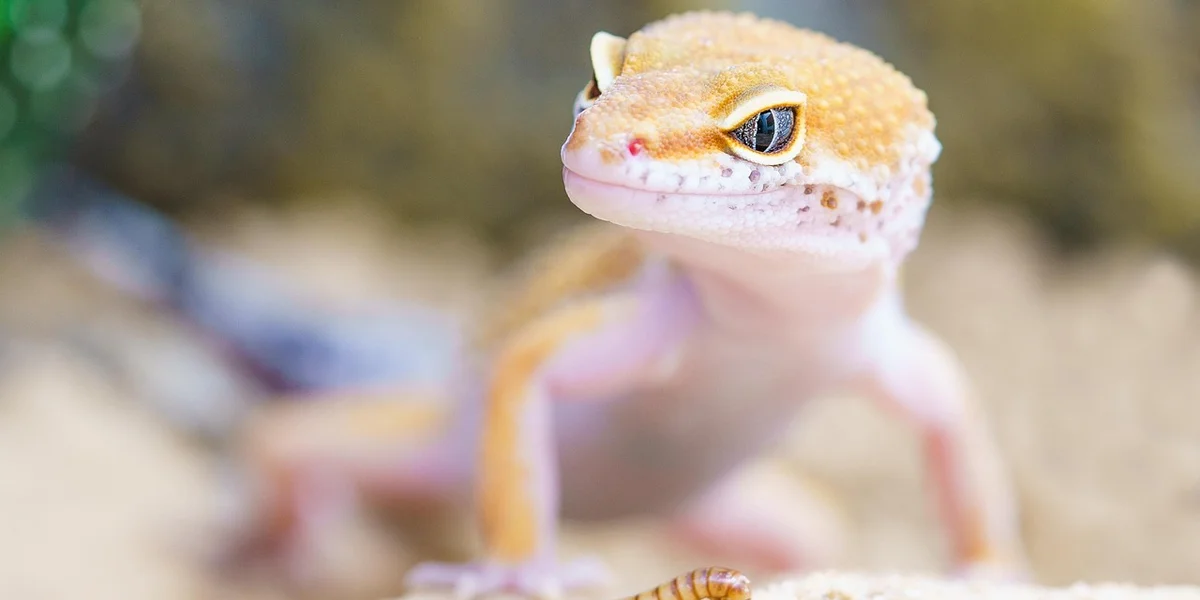
Keeping a close eye on your leopard gecko is one of the most rewarding parts of ownership. You quickly learn to read their unique body language, which tells you everything about their well-being. My gecko, Griffey, has taught me so much about what a content reptile looks like. Understanding what different actions mean is the next step in decoding their behavior. From a tail flick to a gentle stretch, each movement carries a message.
Identify Signs of a Happy Leopard Gecko
A happy leopard gecko is an active and curious one. Look for these positive behaviors.
- Bright, Alert Eyes: Their eyes should be clear and wide open when active. They track movement with interest.
- Strong, Upright Posture: A healthy gecko holds its body and tail off the ground, not slumped.
- Healthy Appetite: They readily accept food and hunt with enthusiasm. Griffey does a little “wormy dance” when he sees the feeding tongs.
- Smooth, Regular Shedding: They should shed their skin in one complete piece every few weeks. A perfect shed is a major health win.
- Exploratory Behavior: You’ll see them climbing, investigating new hides, and patrolling their territory at dawn and dusk.
Watch for Health Issues and Stress Cues
Spotting problems early is critical. Any sudden change in behavior is your first and most important clue that something is wrong. I learned this the hard way when one of my first geckos stopped eating.
- Lethargy and Hiding Excessively: While they need hides, a gecko that never comes out, even at night, is signaling a problem.
- Loss of Appetite or Weight: A skinny tail is a major red flag. The tail should be plump and fat-stored.
- Abnormal Droppings: Watch for runny, discolored, or absent feces. Their urates (the white part) should be white, not yellow.
- Difficulty Shedding (Dysecdysis): Stuck shed, especially on toes and the tip of the tail, can cut off circulation and lead to loss.
- Labored Breathing or Mouth Gaping: This can indicate a respiratory infection and needs immediate veterinary attention.
Keep Their Habitat Clean and Safe
A clean tank is a healthy tank. Poor hygiene is a fast track to bacterial growth, parasites, and a very sick gecko. Establishing a simple routine makes this task effortless.
Follow a Regular Terrarium Cleaning Routine
Break your cleaning down into daily, weekly, and monthly tasks. It feels much more manageable this way.
- Daily: Spot clean feces and urates. Remove any uneaten live food to prevent it from stressing or biting your gecko.
- Weekly: Wash and refill the water dish. Wipe down the glass with a reptile-safe disinfectant. Check and clean humid hides if soiled.
- Monthly (Full Clean): Remove your gecko to a secure temporary bin. Take out all decor and substrate. Scrub the entire enclosure and all items with a reptile-safe disinfectant, rinse thoroughly, and let it dry completely before reassembling.
Ensure Ongoing Enclosure Maintenance
Cleaning is more than just removing waste. Think of maintenance as proactively preventing hazards before they can develop. A quick daily check takes seconds but saves so much worry.
- Check for Escape Routes: Ensure tank lids are secure and there are no gaps. These little guys are surprisingly strong and clever.
- Inspect Heating Equipment: Make sure your under-tank heater and thermostat are functioning correctly. A malfunction can lead to deadly burns or a tank that’s too cold.
- Look for Wear and Tear: Check all hides and decor for sharp edges that could cause injury. Sand down any rough spots you find.
- Verify Humidity Levels: Use a digital hygrometer. Too much humidity can cause respiratory infections, while too little leads to bad sheds.
FAQs
Do leopard geckos enjoy having tank mates?
No, leopard geckos are solitary animals and can become stressed or aggressive if housed with others.
How can I prevent my leopard gecko from getting bored?
Regularly rotate their enclosure decor and introduce novel, safe items like new hides or textured rocks to encourage exploration.
What are signs that my leopard gecko trusts me?
Signs include voluntarily climbing onto your hand, remaining calm during handling, and not immediately retreating when you approach the enclosure.
How does the time of day affect my leopard gecko’s mood?
Leopard geckos are crepuscular, so they are naturally more active, alert, and receptive to interaction during dawn and dusk. Are geckos nocturnal or diurnal in their natural behavior, and how do crepuscular patterns influence care? This understanding helps guide feeding, handling, and enrichment to suit their activity rhythms.
Can playing sounds or music make my leopard gecko happy?
No, loud or sudden noises can cause stress, but consistent, low-volume background sounds may help them acclimate to a calm environment.
Final Words
Making your leopard gecko happy boils down to mastering the fundamentals: a proper warm habitat with secure hides, a nutritious and varied diet, and gentle, stress-free interactions. When you get these core elements right, you create an environment where your gecko can truly thrive, not just survive. To tell if your gecko is happy, look for relaxed posture and a steady appetite. Content geckos will calmly explore and show interest in their surroundings. Seeing my own gecko, Griffey, eagerly explore his tank is the best proof that this simple, consistent care works.
Remember, owning a pet is a lasting commitment to another living being. The most rewarding part of this hobby is the ongoing journey of learning and adapting to provide an even better life for your scaly friend. Stay curious, ask questions, and always advocate for the welfare of your gecko.
Further Reading & Sources
- r/leopardgeckos on Reddit: What are some signs that your gecko is genuinely happy (or unhappy)?
- How To Tell If Your Leopard Gecko Is Happy?
- How to Tell If Your Leopard Gecko Is Happy: 5 Signs to Look For | PangoVet
The Gecko Guide is your ultimate resource for gecko enthusiasts, providing expert advice and practical tips to ensure the health and happiness of your scaly companions. Alexander is a passionate gecko owner with over a decade of experience in reptile care. We are dedicated to offering accurate, up-to-date information to support your gecko journey.Our mission is to foster a community of responsible gecko owners who are passionate about the well-being of these fascinating creatures.
Enrichment Items